


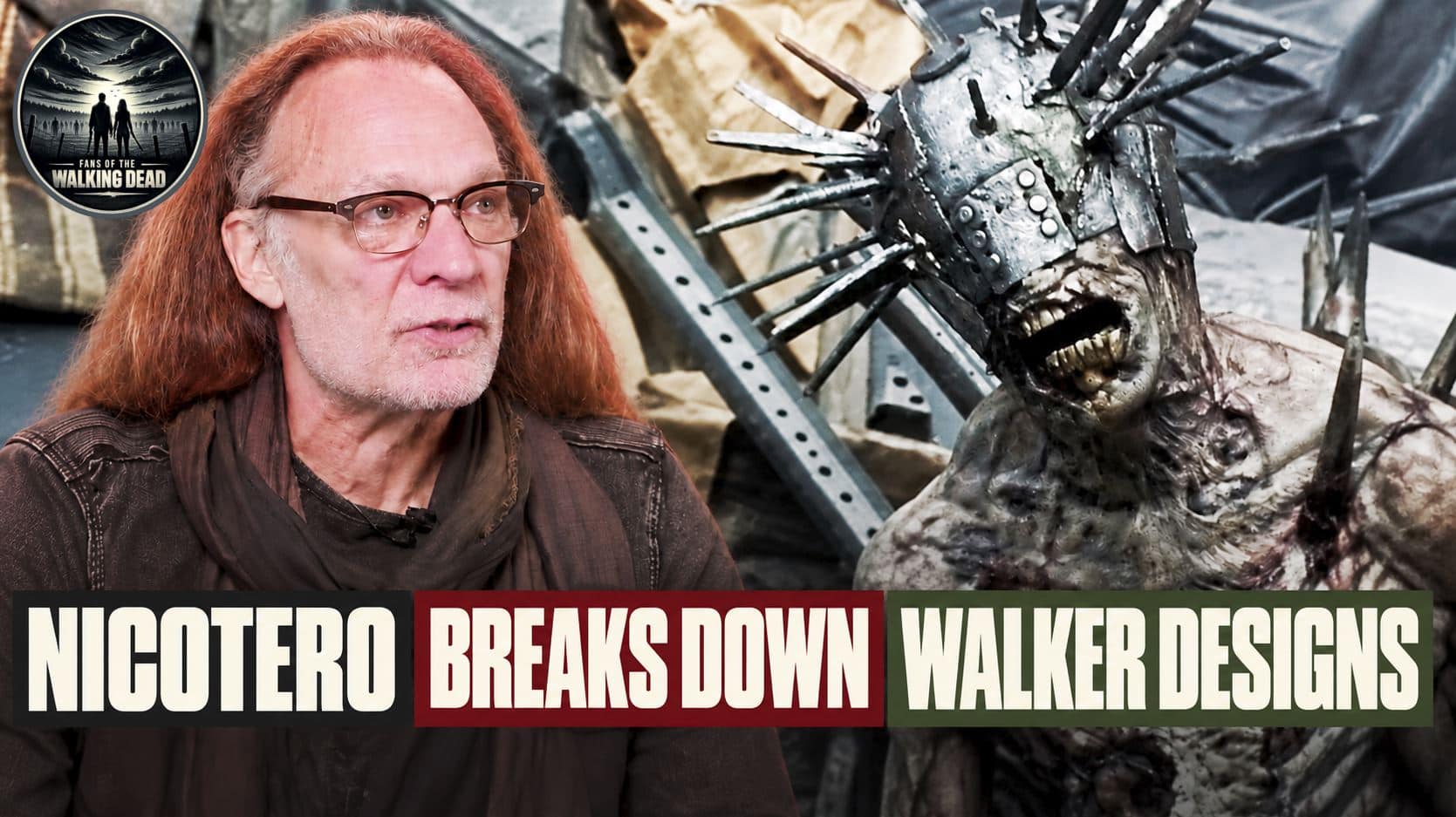
Behind the makeup, puppets, and practical effects
Summary
– Greg Nicotero discussed several memorable Walker designs
– The effects team used prosthetics, puppets, and practical gags
– Dead City’s Walker King was inspired by The Thing
Greg Nicotero has revealed how several memorable Walkers from The Walking Dead universe were created.
One of the featured designs was the well Walker, which took approximately six weeks to build. The costume included a full silicone upper body, gloves, and layered paintwork using purple, blue, and rotting flesh tones.
Nicotero also recalled the scene where the well Walker was torn in half. The production used an explosive dummy for the shot, and the performer playing T-Dog reportedly nearly vomited while watching the effect.
Another design discussed was Winslow, whose elaborate costume was especially difficult to wear during the summer. Cold water was pumped through tubes inside the suit to help keep the performer from overheating.
The crew also used nurses on set while filming Winslow. His helmet was made from fiberglass, while the attached blades were constructed from removable rubber pieces to keep the costume safe.
Nicotero then discussed a zombie orchestra from Season 1 of Daryl Dixon. The performers were secured to a pole that moved back and forth, creating the illusion that the Walkers were playing instruments.
One of the figures in the orchestra was a puppet, while another zombie head belonged to Nicotero himself. The head was mounted on a gimbal so it could move while he appeared to play the harp.
Nicotero also highlighted the Walker King from Dead City, a design inspired by John Carpenter’s The Thing. The creature resembled multiple decomposed Walkers that had merged into a single body.
The Walker King combined a performer inside a suit, puppet elements, and several articulated arms. Puppeteers controlled the extra limbs using green rods, which were later digitally removed.
He also revisited the young Walker from the first episode of The Walking Dead. The performer wore prosthetics, contact lenses, and dentures that distorted her mouth and made it appear as if she were missing flesh.
Nicotero said that the character was among the designs that helped put The Walking Dead on the map 15 years ago. His explanation showed how practical effects and detailed makeup helped define the franchise’s most memorable Walkers.